How to Brew Chinese Tea Properly
Hi! We are Yara and Denis, and we have been living in Egypt for several years and know it inside out. We started developing Chinese tea culture here and decided to write a few articles that will be useful for those just getting to know this world.
Many people think that Chinese tea requires expensive teaware, special knowledge, and complicated ceremonies. In reality, Chinese tea can be brewed with nothing more than boiling water and two ordinary cups. We drank tea this way ourselves for quite a while and never worried about it. Remember that the most important thing is the tea itself; everything else comes with time. At the end of the article, there will be a link to a video guide for those who prefer watching instead of reading long texts.
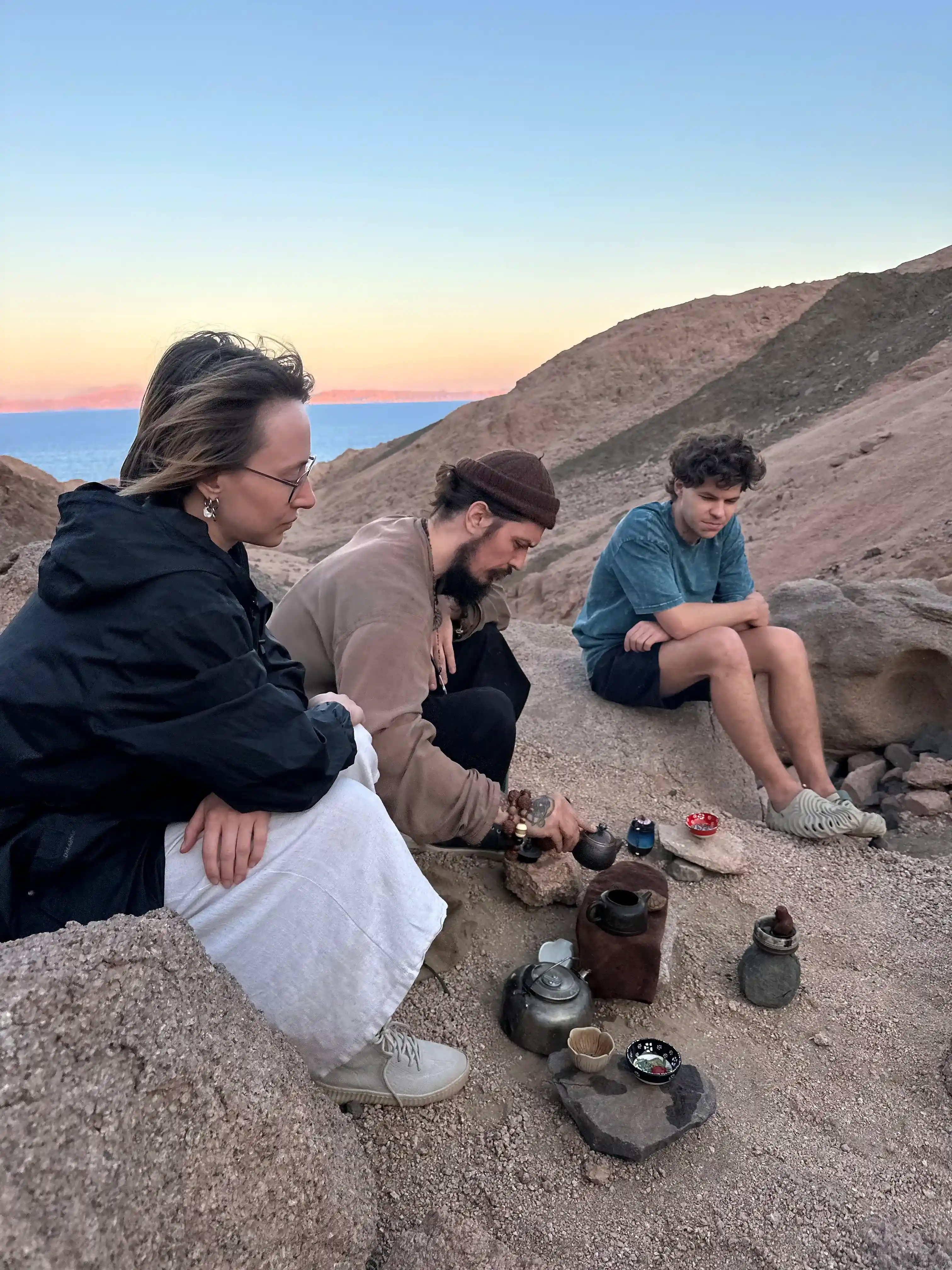
The recommendations below are not mandatory. They will help you get good results more quickly, but it is impossible to “brew Chinese tea incorrectly.” If you like the taste, then you are doing it right.
General Concept
Before talking about teaware and recommendations, we would like to briefly describe the overall brewing process. After that, you may even come up with your own ideas for turning ordinary kitchen items into an improvised tea setup.
The main difference between Chinese tea and most other teas is that it is enjoyed through multiple infusions. This means the tea is brewed not once, but several times.
In the simplest version, you can use a small teapot and a few cups. Put the tea into the teapot and pour boiling water over it. This will be the first infusion. Let the tea sit in the hot water for about 5–10 seconds, then pour the liquid into the sink. The first infusion is usually used to wake up the tea leaves and prepare them for brewing.
Then pour boiling water over the tea again and let it brew for about 10–15 seconds before pouring it into cups. Tea leaves should not stay in boiling water continuously. With each new infusion, increase the brewing time by about 10–15 seconds. You will notice how the taste, aroma, and strength of the tea change with every infusion. A good tea usually lasts for about 5–10 infusions depending on the variety.
Three Simple Brewing Rules
- Do not use boiling water for light teas. Young sheng pu-erhs, green teas, white teas, and most light oolongs do not tolerate boiling water well. Young shengs are especially sensitive to water temperature and brewing time. If you overbrew such tea, it can become too harsh and unpleasantly bitter. If you feel that the tea creates excessive astringency in your mouth, it is better not to drink it. Light teas are usually brewed with water around 80–90°C, although the ideal temperature varies from tea to tea. When you buy tea from our shop, we indicate the recommended brewing temperature on every package.
At home, we simply let the water boil and then leave the kettle lid open for 5–7 minutes to allow the water to cool down. This is usually enough for most light teas.
If you are used to drinking tea while working and do not have time for multiple infusions, you can use 3–5 grams of dark tea for 0.5 liters of water and brew it the same way you would brew any regular tea. This is the simplest and fastest way to prepare Chinese tea, but you will miss the pleasure of experiencing the full range of flavors. - Do not leave tea in water for too long. We already discussed this in the previous section. This is another way to overbrew tea and spoil its flavor. In addition, if you really want to experience the full diversity of Chinese tea flavors, the multiple-infusion method is perfect for that.
There are teas that do not necessarily need to be brewed using multiple infusions (such as shu pu-erhs and red teas), and their flavor does not suffer from it. However, even with these teas, you can discover new flavor notes with every infusion. - Do not be afraid to experiment. The same tea can brew differently depending on the harvest year, the producer, and many other factors. Only you can determine which brewing method suits you best.
What teaware do you need
At first, you don’t need to think about special teaware. You only need a 150 ml cup. About 7 g of tea is used for this volume. The tea is placed in the cup and covered with a saucer on top. In practice, this works as an improvised gaiwan.
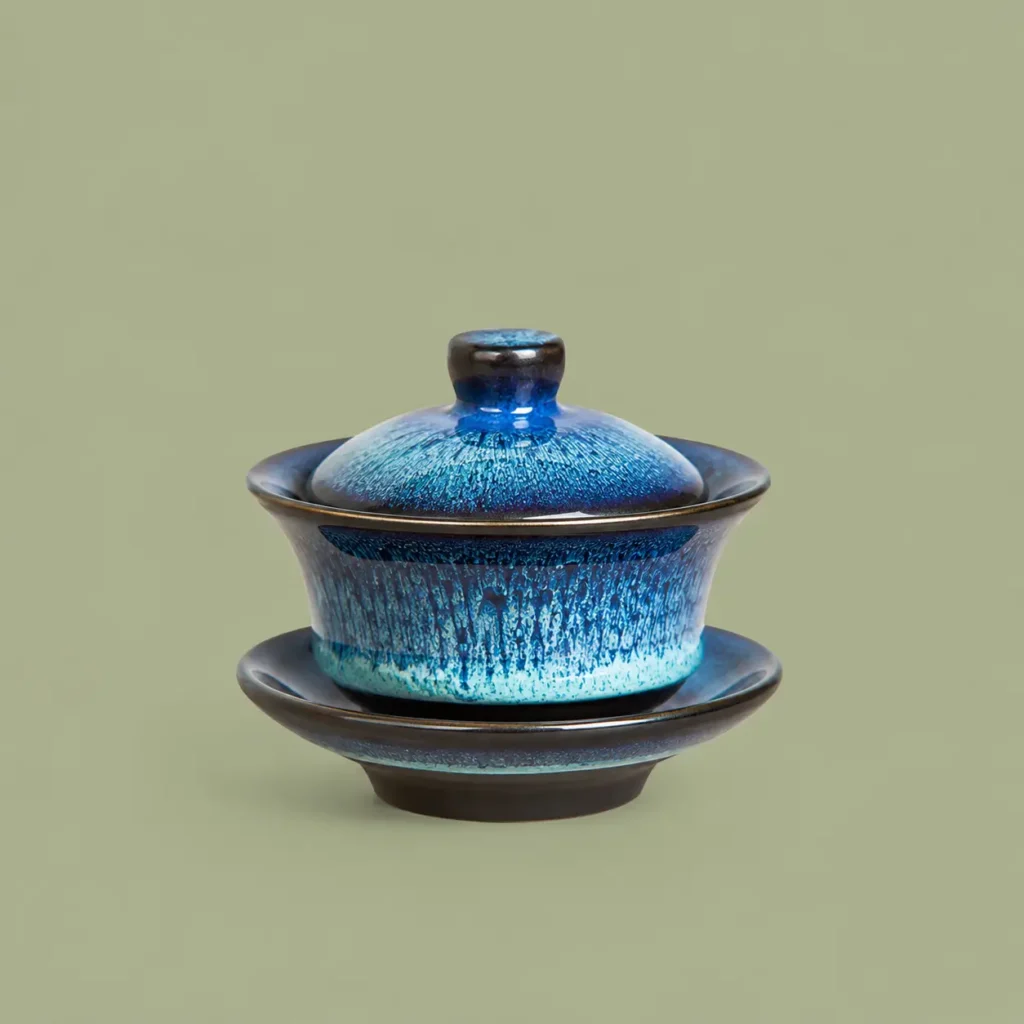
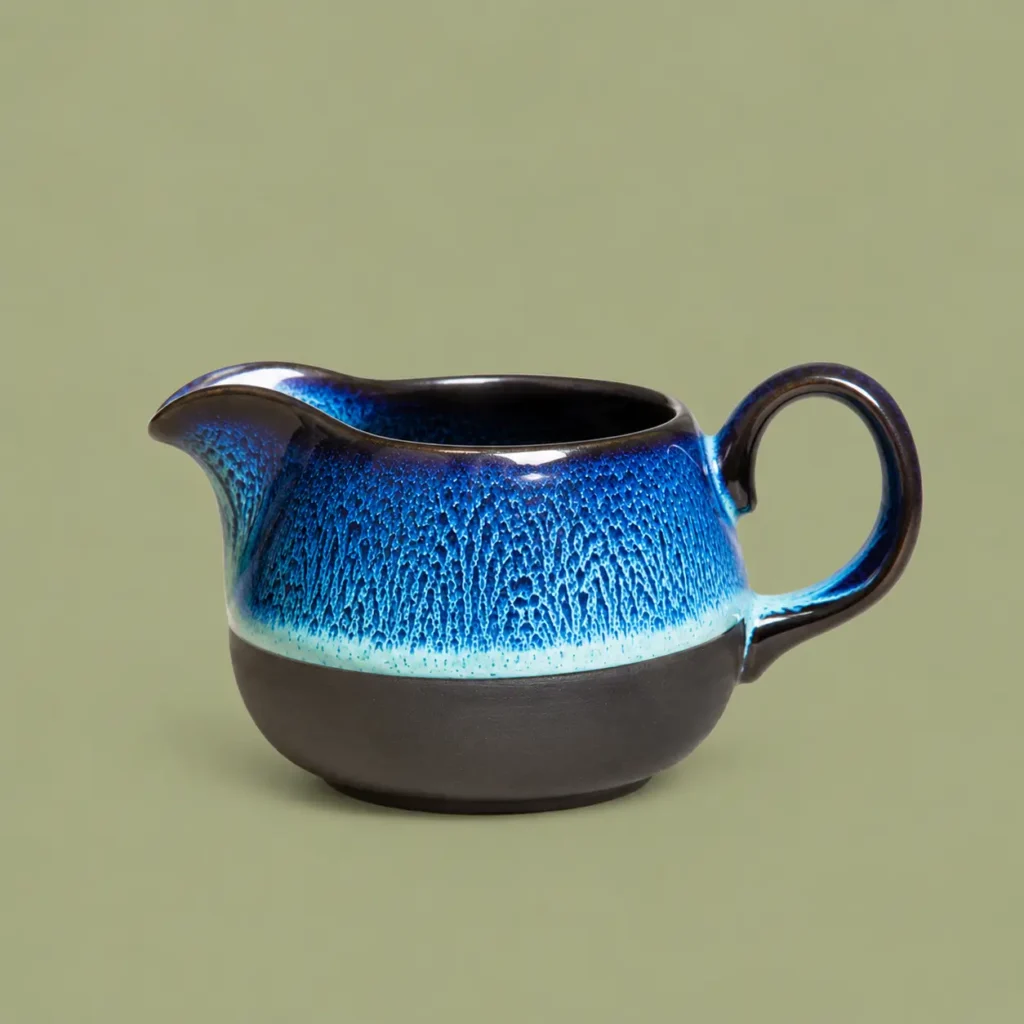
From the brewing cup, the tea is poured while holding the leaves with the saucer into several drinking cups, or into another 150 ml cup if you are drinking alone. And that’s it! Apart from the brewing cup, saucer, and drinking cups, nothing else is really needed. Later, you can add another 150 ml cup to your home set. In Chinese tradition, this vessel is called a “fairness cup” or chahai. It is used to pour out the brewed tea. This prevents overbrewing and also mixes the infusion so that everyone gets tea with the same taste.
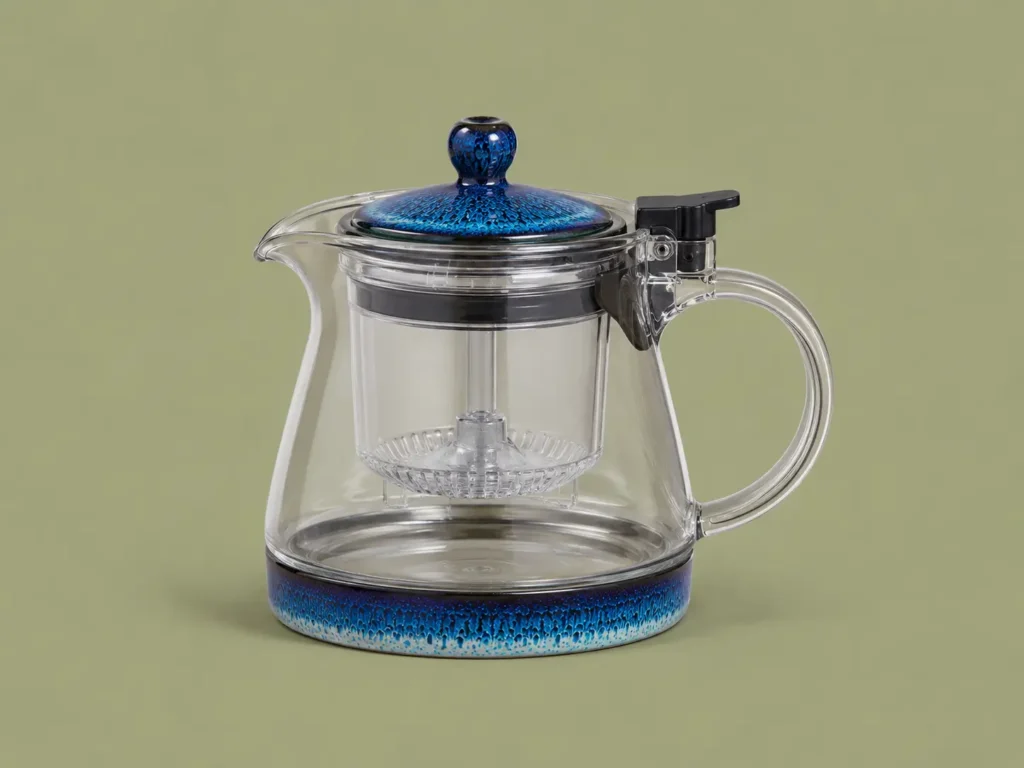
For convenience, you can get a simple push-button teapot. If you don’t want to look around in stores, you can order it from Noon or Temu.
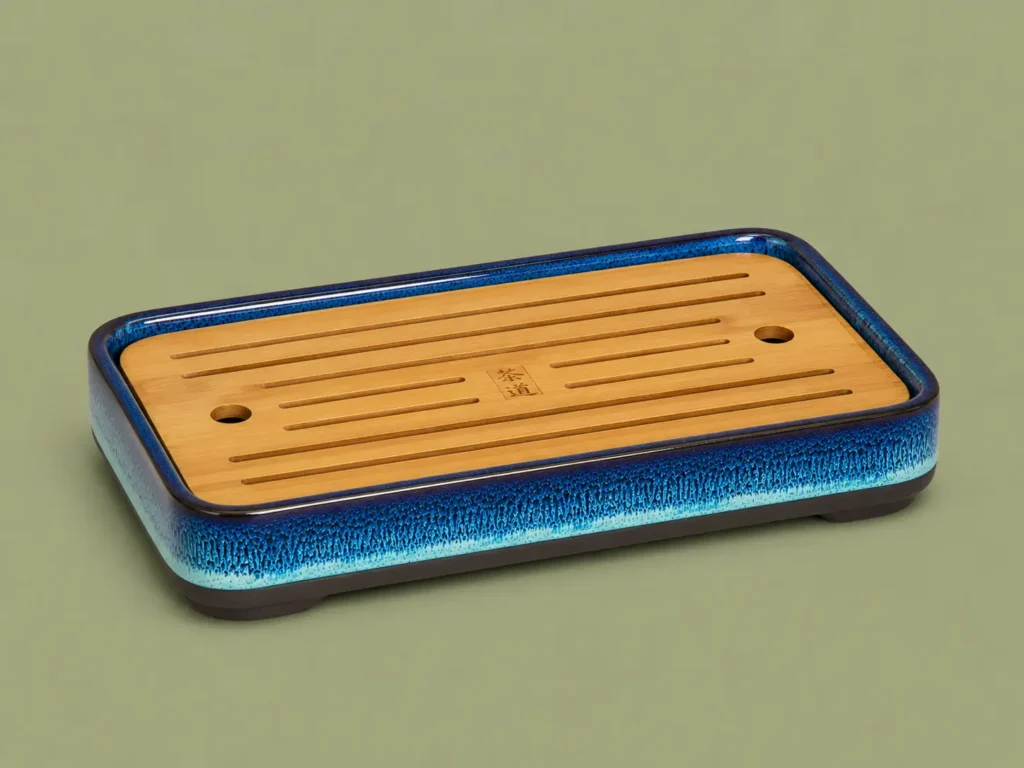
Once you get into tea culture, you can consider buying a simple tea set. It usually costs up to $30. Such a set includes a 150 ml teapot or gaiwan, a fairness cup (chahai), 4 small cups, and a chaban — a special tray with a drainage system where the first rinse and leftover tea are poured out.
It is also useful to get a thermos. It helps maintain the right water temperature throughout the tea session without needing to reboil or cool the water every time.
Which tea is easiest for beginners to brew
We do not recommend starting with young sheng pu-erh or especially delicate teas, as their subtle flavor notes are harder to understand and easier to ruin. We recommend starting with teas such as:
- Any shu pu-erh, for example Gong Ting
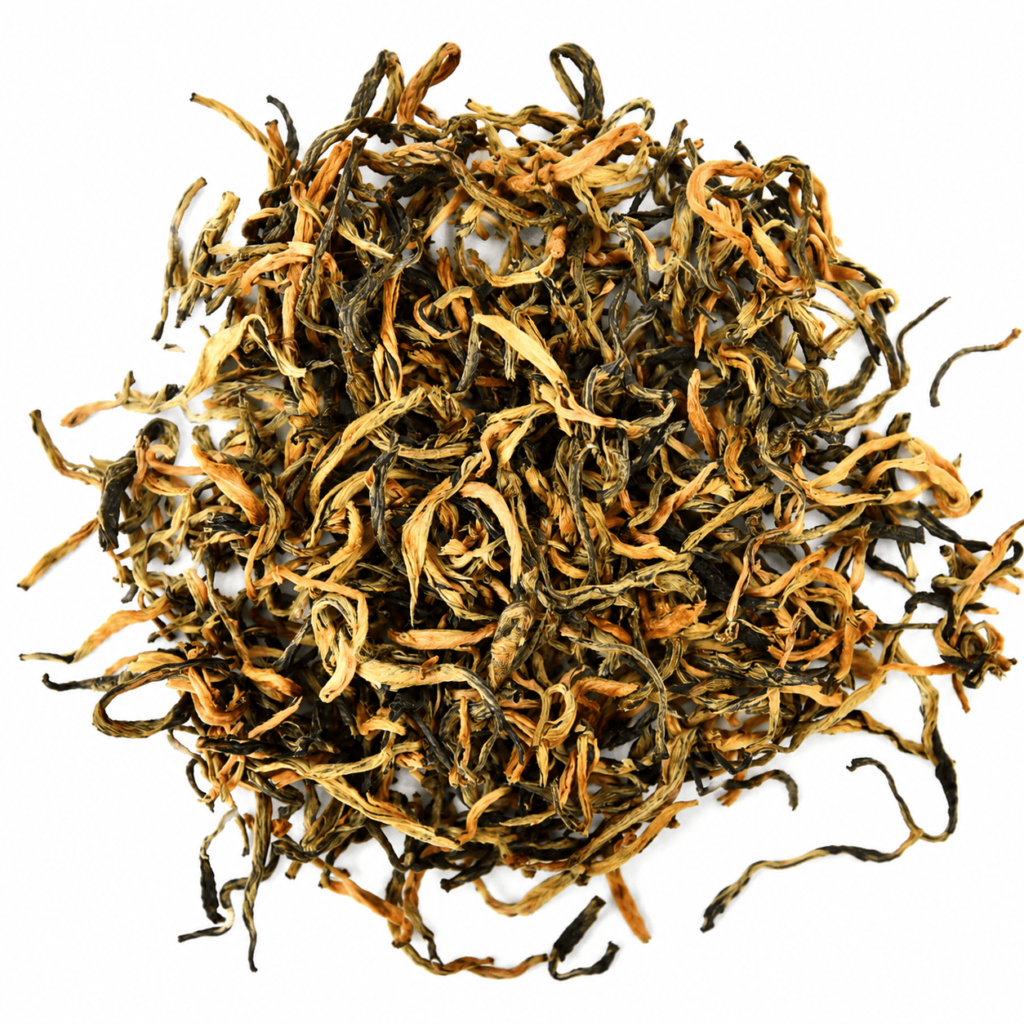
- Jin Hao Dian Hong or Lapsang Souchong — red teas
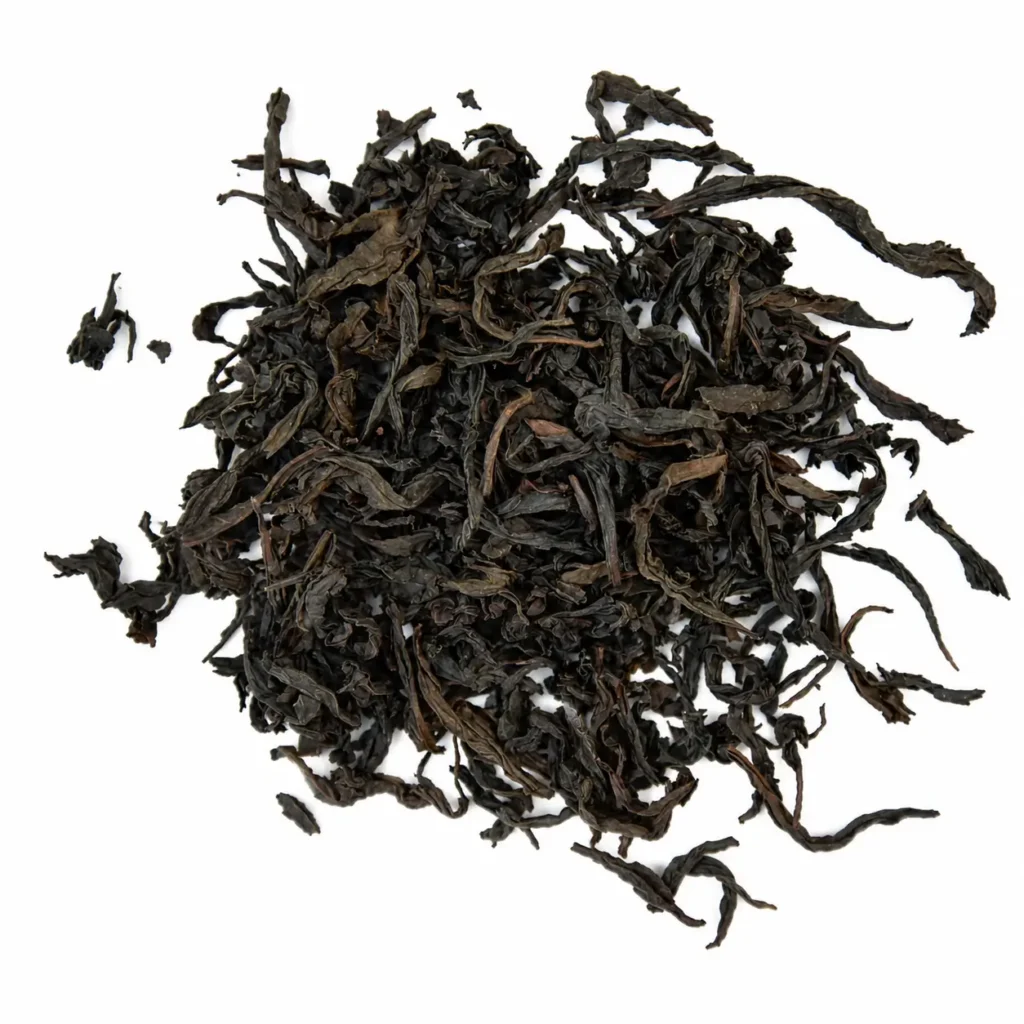
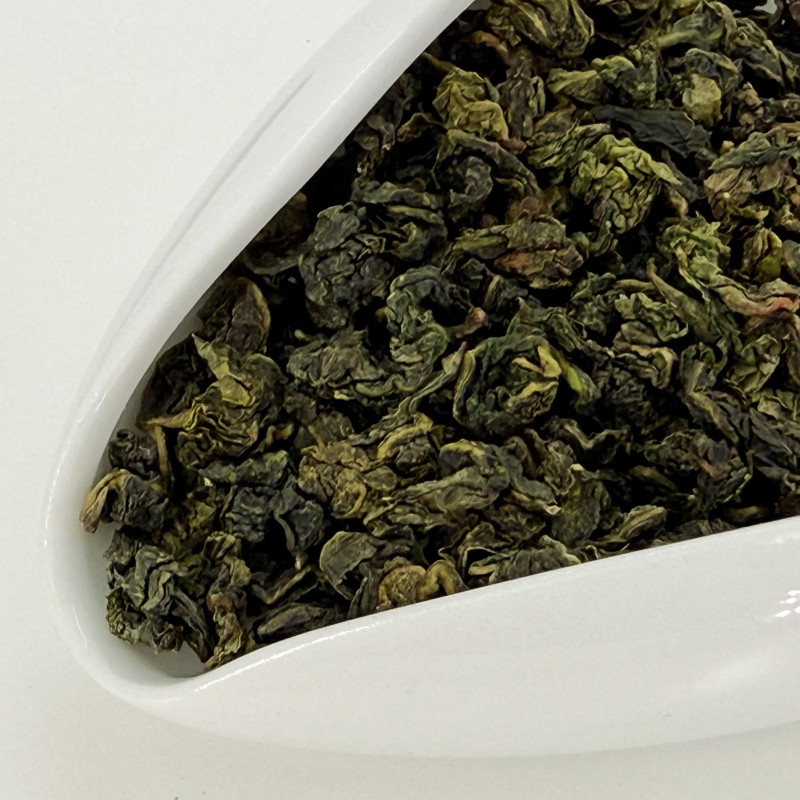
- Tie Guan Yin or Da Hong Pao — although they are slightly more difficult to brew than the previous teas, they have a clear and expressive taste. These are excellent oolongs for beginners. One is fresh and grassy, the other is roasted and cozy.
Conclusion
Don’t try to learn all the rules and details at once. Chinese tea is not an exam that can be passed right or wrong. Just choose a tea, brew it in the way that feels convenient for you, and gradually discover your favorite flavors and brewing methods.
For those who are afraid of ruining their first tea, we have made a detailed video guide in Russian.
And the guide will also be available soon in English and Arabic! 🙂